
Should I Memorize My Sides or Read the Whole Script? What Casting Directors Say
Off book or sides in hand, full script or just your pages: what named casting directors advise, plus a prep order for auditions, self-tapes, and callbacks.

The Offbook team
Jun 25, 2025 · Updated Oct 7, 2026 · 10 min read
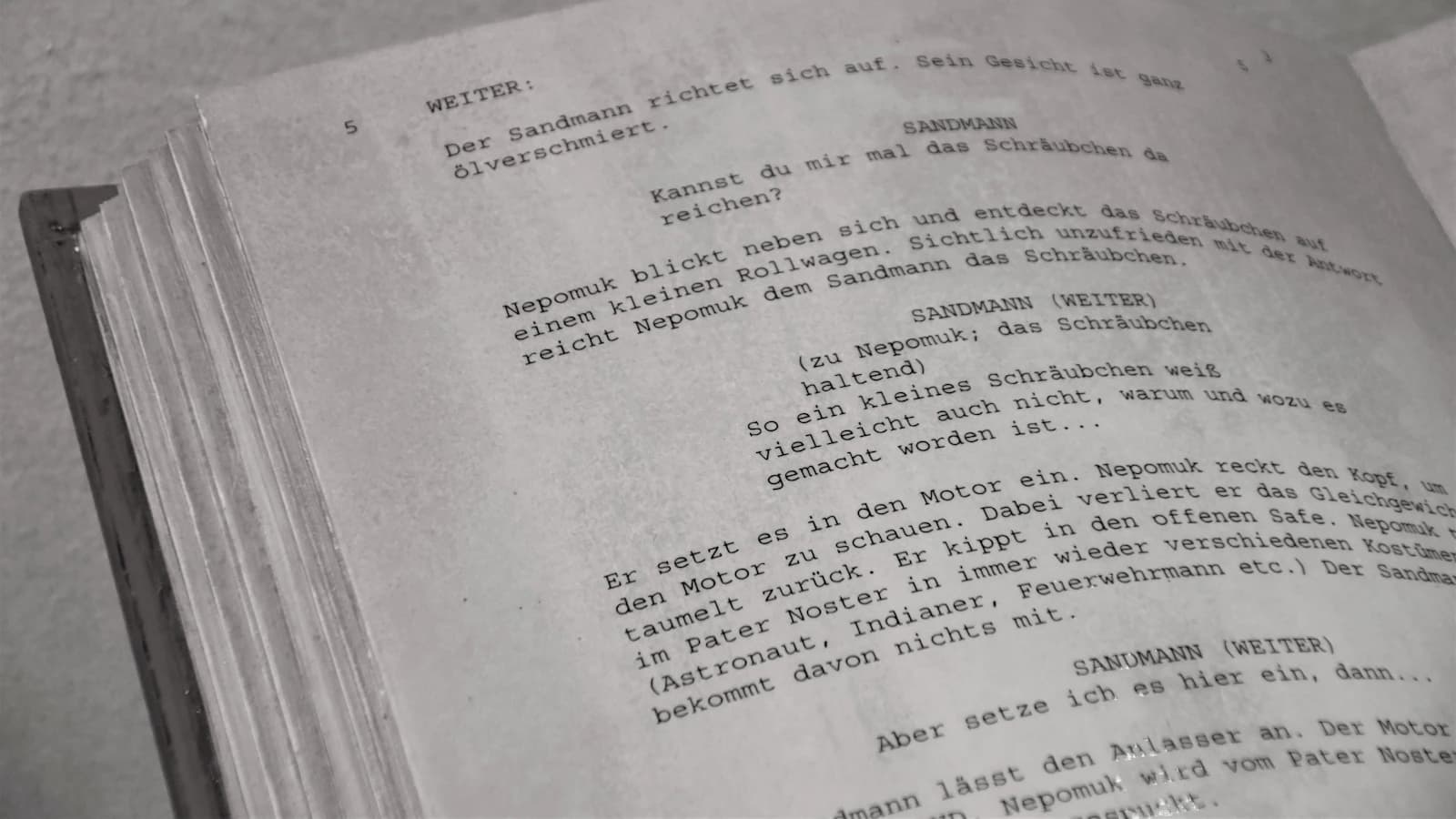
The audition email lands at four in the afternoon. Attached: three pages of sides. Below that, a link to the full script, all 112 pages of it. Or maybe there is no script at all, just a paragraph about your character and a time slot for tomorrow morning.
So you start doing the math. Do you spend the evening drilling three pages until you could say them in your sleep? Do you read the whole thing so you understand who this person is? And once you’re in the room, are you supposed to hold the pages or not?
The short version: the sides are the audition, so they come first, and you should know them well enough to look up from the page almost the whole time. Read the full script once, for story, whenever you can get it. Then hold your pages anyway, unless it’s a commercial. The rest of this piece explains why, using what named casting directors have said on the record, and gives you an order to work in.
Your sides are the audition; the script is the map
Sides are the few pages of a script that casting chooses for you to read. They’re picked because they show what the role needs: the turn, the temper, the timing. Everything you’re judged on in the room happens inside those pages.
But the pages don’t explain themselves. A scene where your character goes quiet means one thing if she has just been fired and another if she has just been proposed to. The full script tells you which. Veteran casting director Marci Liroff puts it bluntly in a Backstage column: for a TV or film role, read the entire script, whether you have one line or 20. Without it, she argues, you can’t know the tone or the language of the piece. Once you’re cast, our guide to breaking down a full script for a role takes it pass by pass.
So the real question isn’t sides or script. It’s how to split a limited evening between them, and the answer depends on what you’ve been given and what kind of audition it is. Our guide to breaking down audition sides covers what to look for on the pages.
Off book or sides in hand? What casting directors actually say
Ask ten actors and you’ll hear ten rules. Casting directors disagree too, and the honest answer is that offices differ. Here is what several working professionals have said in print.
Know it, but keep the pages. Liroff, who has spent nearly 40 years in casting, wrote in another Backstage piece that there are no hard and fast rules. In the U.S., she says, most casting directors want you as off book as you can be, with the sides handy and the pages turning along with the scene. Holding them has a quiet benefit: it reminds the network and studio executives who watch the tape that this is a work in progress, not a finished performance.
Off book frees you to take a note. In a later column, Liroff says she’d rather see actors completely off book at a first audition so she can give them adjustments. Her colleague Matthew Lessall, a former president of the Casting Society of America, agreed, calling the ability to take a note in the room the “mark of a truly gifted actor.” That’s the real reason to memorize: not to impress anyone, but to have your eyes and attention free when someone asks for something different.
Holding them is never a crime. Actor and audition teacher Michael Kostroff, quoted in Backstage’s round-up of advice on sides, goes further. He says you should always hold the sides, even when you know the lines cold, and simply look down if you forget. In his view, it’s the worry about memorization, not the lack of it, that stiffens a read. In the same round-up, Liroff suggests turning the pages along with the scene so you can find your place quickly if you get lost.
Commercials are the exception
Commercial casting runs on different logic. Ken Lazer, a commercial casting director with more than 25 years in the job, wrote in Backstage that for commercials it usually looks better not to hold the copy, because clients tend to take what they see on the tape as what they’ll get on the day. For TV and film, he says, holding sides is fine. He also notes that some casting directors want the pages in your hand because a scene may have changed at the last minute.
Theater, and offices abroad
Theater offices vary as well. Lucy Jenkins of the UK casting office Jenkins McShane, which cast The Play That Goes Wrong in the West End, says in tips published by the actor-development charity Just Add Milk that she’d rather you spend your time reading the play a few times than learning lines for a first audition. Be familiar enough not to be bound to the page, she says; the script in your hand is fine, and you may be asked to learn it for recalls.
Liroff, by contrast, has written that actors in England and Australia would never bring sides into the room. Both can be true. Offices differ even within one city, which is why the safest plan is the one that works in either room.
Union self-tapes
For self-tapes on union film and TV work, the question has a formal answer. Under the SAG-AFTRA agreement that ended the 2023 strike, Backstage reported, memorization is not required, sides must arrive at least 48 hours before the deadline (72 for minors), and a first self-tape is capped at eight pages. That doesn’t mean a tape with your eyes glued to a printout will compete. It means you won’t be penalized for keeping the pages close.
Put all of that together and a working standard emerges: know the sides well enough that the page is a safety net, not a crutch. Your eyes should be on your reader for nearly every line. The paper in your hand is there for the moment your mind slips, and for the people watching later who need a reminder that this is an audition. For a step-by-step routine from email to upload, see how to learn sides for an audition.
How to read the full script without losing your evening
When you do have the script, read it once, straight through, for story. Don’t stop to analyze, and don’t start memorizing scenes you won’t perform. A feature script is a long read, so give it one sitting, not your whole night. Then go back only to the parts that touch your scenes.
You’re reading for a few specific things, and it helps to jot them down as you go:
- What happened just before each of your scenes, and what your character walks in knowing.
- What other characters say about your character when you’re not on the page.
- Where your character ends up, so you know what the sides are building toward.
- The tone of the whole piece, which tells you how big or small to play the scene.
- Any line in your sides that refers to an event somewhere else in the script.
Then stop. The trap is spending three hours on the script and forty minutes on the pages you’ll actually perform. Lessall, answering an actor with four auditions in one day, said that memorizing 50 pages the night before for several castings “makes no sense.” His advice was to choose the audition that matters most to you, learn those pages, do your best on the rest, and ask your agent whether one appointment can move or become a self-tape.
If your real problem is the clock, not the script, our guide to how long to prepare for an audition has day-by-day plans for a week, three days, and 24 hours.
When there’s no script: the breakdown, the synopsis, and good questions
Often you won’t get the full script. TV episodes may not be written yet when casting starts, and some projects are kept under lock. Liroff has written that when she cast for Steven Spielberg, his scripts were so closely held that actors received special audition scenes instead. When nobody has the script, at least everyone is working from the same blank page.
Start with the breakdown, the casting notice that describes the project and your role. According to Breakdown Services, which publishes breakdowns to agents and to actors on Actors Access, a breakdown is meant to be a synopsis of the entire script along with descriptions of each role. Read yours as closely as you’d read a scene. The adjectives in your character description are casting’s shorthand for what they hope to see. Our guide on how to read a casting breakdown goes through every field.
Then ask. Liroff suggests asking for a synopsis, and asking casting what happened just before the scene you’re reading. A short, specific question through your agent or at the top of the audition is normal. “Is this before or after she finds out?” gets you further than a guess.
Whatever you can’t find out, decide. Choose what happened an hour before the scene, what your character wants from the other person, and what they lose if they don’t get it. A specific choice that turns out to be wrong can be redirected in a moment; a vague one gives the room nothing to work with.
One more thing: if you didn’t read the script, don’t claim you did. Jenkins puts it plainly: “Don’t tell us you’ve read the play if you haven’t.” She adds that they can always tell.
A prep order that works with any amount of time
Whether you have two hours or two days, work in this order. Each step is worth more than the one after it, so if time runs out, you’ve lost the least important work.
- Read the sides twice for sense. Who is your character talking to, what do they want, and where does the scene turn?
- Get the sides into your head. Test yourself from the other character’s lines instead of rereading your own. Our guide to memorizing lines quickly walks through the cue-drill method step by step.
- Read the full script once, if you have it. Story, tone, and what happens just before your scenes.
- Prepare a second way to play it. If they redirect you, you’ll want an alternative ready. Jenkins suggests trying a few different ways of playing the scene while you prepare, so you don’t get stuck in your first choice.
- Go back to the sides. Run them again with what the script taught you, and check that you can get through with only glances at the page.
- Extras, only if there’s time left. For a TV role, watch a scene from the show to catch its rhythm. For a play, look up any reference in the text you don’t understand.
Notice that the full script sits third, not first. You read it once you know the sides well enough to know what you’re reading for. And if the pages only arrive the morning of the audition, skip most of this and use our guide to cold reading for auditions instead.
Callbacks change the math
A callback means the room liked what you did, and that’s the most useful fact you have. Matt Newton, an on-camera acting coach in New York, advises in his Backstage guide to callbacks that you repeat what you did the first time, down to the same outfit, unless you’ve been given notes. Just don’t lock it in: callbacks are where directors test whether you can take an adjustment. To remember what you did, write it down after every first read; our free audition tracker keeps those notes with each audition.
The script matters more now. Newton notes that directors often ask at callbacks what you thought of the script, and that scripts get revised between rounds, so confirm you have the current pages. In episodic producer sessions, you may also be asked to read a different part on the spot. If you skipped the full script for the first round, read it before you go back. For the rest of the callback, see our guide on how to prepare for a callback.
Memorization expectations can rise too. Jenkins says her office may ask actors to learn lines for recalls even when it didn’t for the first round. If you’re unsure, ask your agent or the casting office whether they want you off book. It’s an ordinary question, and nobody will hold it against you.
Running the sides when nobody’s around to read
Sides are easier to learn when someone feeds you the other lines, because that’s how you’ll hear them in the room. If no one is free, record the other character’s lines into your phone, leave a pause after each one for your answer, and play it back with your own lines covered. A friend on a video call works too, even for twenty minutes.
Offbook makes this easy. Upload the sides or the full script, pick your role, and realistic voices read the other characters; it listens through your microphone and plays the next cue when you finish your line, and you can hide your own lines to test yourself. Rehearse on your laptop with the full script on a big screen, and listen to your scenes on your phone anywhere.
Whatever you use, the goal is the same: get to the point where the pages in your hand are a formality. Then the full script can do its real job, which is to make the three pages you’re holding feel like part of a whole life. If the audition is tomorrow and none of this is done yet, our last-minute audition guide has a plan for tonight.
Keep reading
- Best Teleprompter Apps for Actors’ Self-Tapes, ComparedTen teleprompter and reader apps judged on what matters on a self-tape: whether the text follows your voice, where it sits next to the lens, who reads the other lines, and whether it helps you get off the page. Plus what casting directors say about eyeline, and why Offbook is our pick.
- How to Slate for a Self-Tape: Examples for Every Kind of RequestWhether to slate at all, what a slate can include, and word-for-word examples for every kind of request: name and agency, height and location, full body and profiles, hands, musical theater, and UK idents. Plus file naming and what to do when you fumble it.
- How to Break Down a Script for a Role (the Whole Play, Not Just Your Scenes)You got the part. Now there are ninety pages to understand before first rehearsal. A pass-by-pass method for breaking down a full play or screenplay: facts, the three lists, a scene map of what your character wants, and how the work helps the lines stick.
- How to Memorize Lines for Film and TV When the Pages Keep ChangingScreen scripts change late and shoot out of order. How to read revision pages, learn from the day’s sides, and relearn a rewritten scene overnight without losing the rest.